
Paving in the Venice of America, 7 feet above sea level
Asphalt Paving in Fort Lauderdale, FL
Driveways and lots shaped to shed water fast, in a city laced with 165 miles of waterways.
- Free on-site estimates
- Written quote before work starts
- Slope and drainage checked on every job
Paving Where Water Sets the Rules
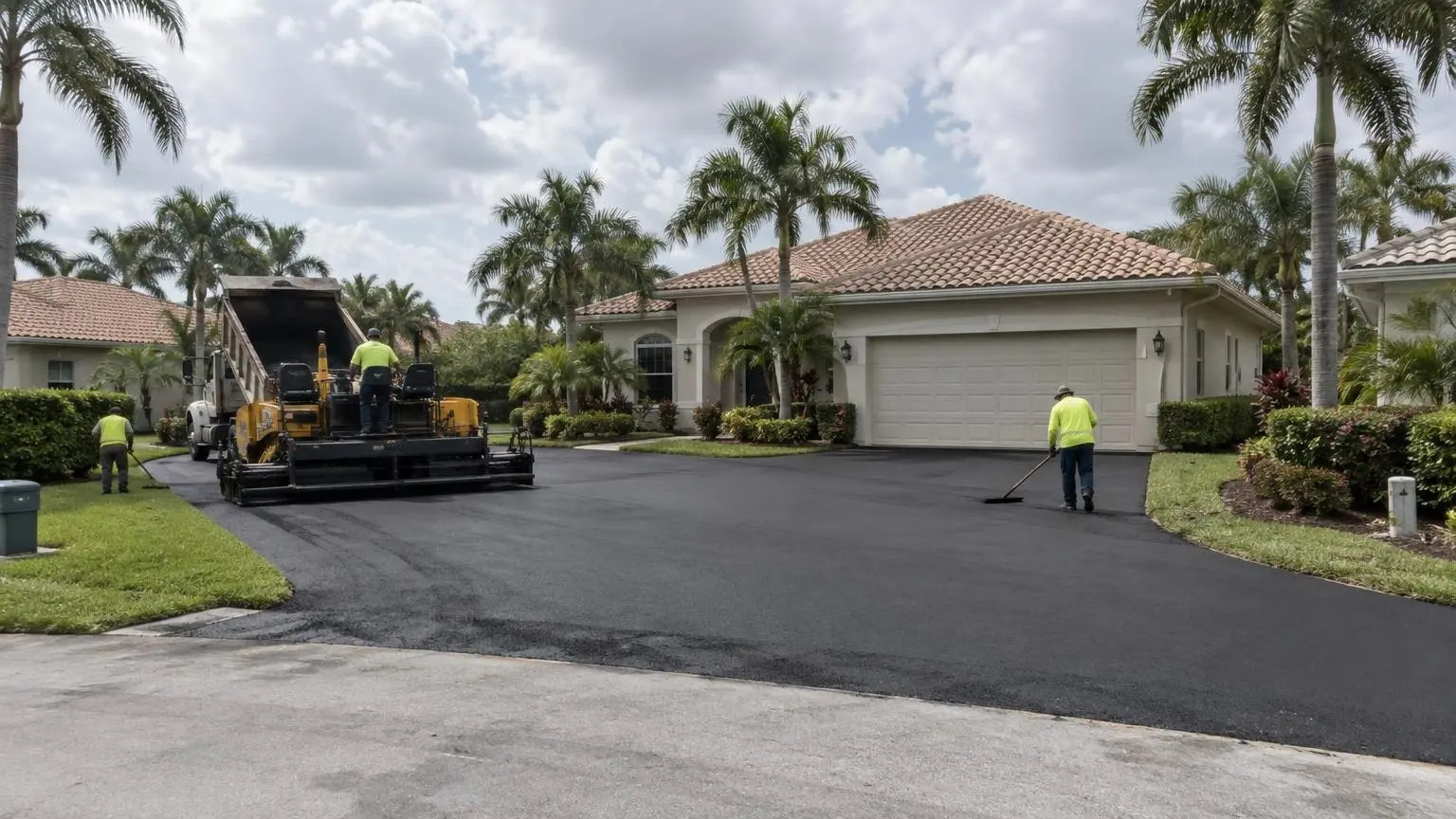
Asphalt Paving in Fort Lauderdale starts with one question before anything else: where will the water go? The city sits at an elevation of roughly 7 feet, has about 165 miles of inland waterways inside its limits, and averages close to 61 inches of rain a year. A driveway or parking area here is part of the drainage system whether anyone planned it that way or not, so we design the slope first and pick the asphalt thickness second.
That approach comes from the record. On April 12, 2023, Fort Lauderdale took in 25.91 inches of rain, flooding streets and temporarily shutting the airport. No pavement can absorb a day like that, but a surface that pitches away from the house, toward a swale or inlet, recovers far faster after ordinary summer storms than one that holds puddles against a garage door.
How we lay out a Fort Lauderdale job
- Shoot existing grades and mark where runoff currently travels
- Set a cross-slope so water leaves the slab instead of pooling on it
- Keep finished height in mind at doorways, garage thresholds and seawall-side yards
- Check whether any part of the work reaches the swale or public right-of-way
- Put the scope, materials and drainage plan in a written quote
The swale and the city's engineering desk
The strip between your property line and the street usually belongs to the public right-of-way. Fort Lauderdale's Engineering Permitting Division reviews construction permits for driveway, sidewalk and roadway improvements in that area. If a new apron or widened entrance crosses into the swale, we plan for that review rather than treat it as an afterthought, and we can help put together the application where the city allows it; the city may ask a contractor to register before submitting. Rules change, so confirm current requirements with the city before work begins.
Sun, heat and oxidation
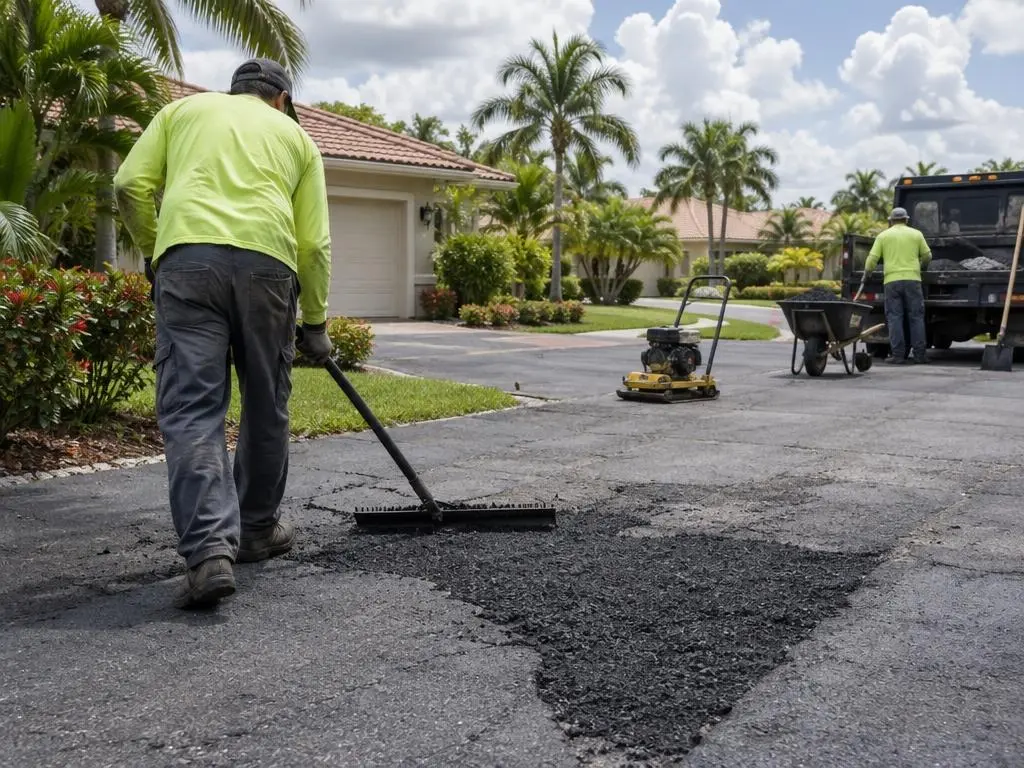
The South Florida climate works on asphalt year-round: relentless UV and heat oxidize the binder, turning a black surface gray and brittle, and coastal exposure adds wear. Sealcoating on a regular cycle slows that process. On older pavement that has already cracked through, we look at patching or a resurfacing overlay before recommending a full tear-out.
Storm season planning
Hurricane season runs June 1 through November 30, and the city was struck by Wilma in 2005 and directly affected by Irma in 2017. Scheduling paving for drier months, and fixing low spots before the wet season arrives, is a practical way to limit standing water on a lot or driveway. After a big storm, it is also worth walking the surface for new settlement or washed-out edges, since small depressions that collect water tend to grow into potholes once traffic starts pounding them.
Fort Lauderdale Conditions Worth Knowing
- A record day of rain. On April 12, 2023, Fort Lauderdale recorded 25.91 inches of rainfall, causing historic flooding and a temporary closure of Fort Lauderdale-Hollywood International Airport. Annual rainfall averages 60.95 inches, mostly from May through October.
- Canals everywhere. Known as the Venice of America, the city has about 165 miles of waterways within its limits and sits at an elevation of about 7 feet, which keeps drainage and slope at the center of any paving plan.
- Right-of-way review. The city's Engineering Permitting Division reviews construction permits for driveway, sidewalk and roadway improvements in the public right-of-way. Confirm current rules with the city for your address.
- Population and ownership. Fort Lauderdale had an estimated 188,677 residents in July 2025. Roughly 54.1% of its housing units are lived in by their owners, and those homes carry a median value of $486,700, per Census estimates for 2020 to 2024.
Our Services in Fort Lauderdale, FL
Fort Lauderdale Questions
My driveway floods every summer afternoon. Can repaving fix it?
Often it helps a great deal, but only if the new surface is regraded rather than laid over the old shape. We measure where the water sits now, then rebuild the base and pitch so runoff heads toward a swale, lawn or the street. Sometimes a modest change, such as lowering an edge or adding a slight crown, does most of the work. If the street itself floods, the driveway can drain well and still be surrounded by water during extreme rain, so we explain what grading can and cannot do.
Do I need a permit to replace the apron by the street?
Work in the public right-of-way, including the apron and swale, may need to go through the city's engineering permit process (confirm with the city). Requirements depend on the address and the scope, so check with Fort Lauderdale before scheduling. Where the city allows, we can help prepare the permit application; contractor registration with the city may come first.
Is asphalt a good choice so close to the water?
It can be. Asphalt flexes slightly, patches easily and can be resurfaced in layers. Strong sun and heat age the surface, and coastal exposure adds wear, so keeping up a sealcoating schedule is worth planning for.
When is the easiest time of year to pave?
The drier months, roughly November through April, usually give the most predictable working days. Rain can still fall in any month, so we watch the forecast and adjust the start date when needed.
Free Estimates in Fort Lauderdale, FL
Free estimates in Fort Lauderdale.
Asphalt Paving Near Fort Lauderdale
- Asphalt Paving in Davie, FL
- Asphalt Paving in Hollywood, FL
- Asphalt Paving in Pembroke Pines, FL
- Asphalt Paving in Miramar, FL
- Asphalt Paving in Plantation, FL
- Asphalt Paving in Sunrise, FL
- Asphalt Paving in Weston, FL
- Asphalt Paving in Cooper City, FL
- Asphalt Paving in Southwest Ranches, FL
- Asphalt Paving in Dania Beach, FL
- Asphalt Paving in Hallandale Beach, FL
- Asphalt Paving in Lauderhill, FL
- Asphalt Paving in Lauderdale Lakes, FL
- Asphalt Paving in Tamarac, FL
- Asphalt Paving in Coral Springs, FL
- Asphalt Paving in Margate, FL
- Asphalt Paving in Coconut Creek, FL
- Asphalt Paving in Pompano Beach, FL
- Asphalt Paving in Deerfield Beach, FL
- Asphalt Paving in Oakland Park, FL
- Asphalt Paving in Wilton Manors, FL
- Asphalt Paving in Parkland, FL
- Asphalt Paving in North Lauderdale, FL
- Asphalt Paving in West Park, FL
- Asphalt Paving in Miami Gardens, FL
- Asphalt Paving in Hialeah, FL
- Asphalt Paving in Doral, FL
- Asphalt Paving in Miami Lakes, FL
- Asphalt Paving in Aventura, FL